Collect the evidence
Review goals, ICP, spend, search visibility, landing pages, CRM stages, analytics, content, and sales notes.
Approach
Most plans start with a channel decision. Growth Fisher starts with the path the buyer actually takes: search or click, page, offer, form, CRM, sales response, and opportunity movement.
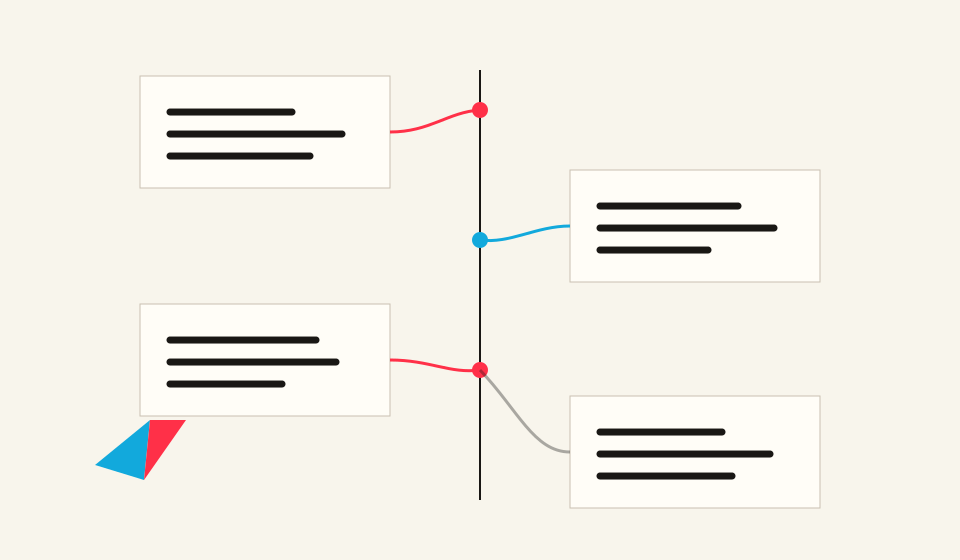
Review goals, ICP, spend, search visibility, landing pages, CRM stages, analytics, content, and sales notes.
Map the route from first touch to lead, MQL, SQL, opportunity, and revenue movement where the data exists.
Identify whether the issue is demand quality, message fit, page friction, qualification, handoff, or measurement.
Launch the highest-priority campaign, page, content, workflow, or reporting fix.
Review what changed, what did not, what became clearer, and what should be paused.
Increase budget, content velocity, or automation only when the evidence can defend it.
Principle
If the constraint is ICP clarity, more spend buys a bigger mixed audience. If the constraint is landing page conversion, more traffic exposes the weakness faster. If the constraint is CRM handoff, better ads still create poor pipeline.
The work is to see the whole path clearly enough that the next decision becomes obvious: fix the offer, rebuild the page, change the audience, repair the handoff, or stop funding the wrong activity.
Start with a Growth Review
Share the channels, pages, CRM stages, and numbers your team does not fully trust. You will get a direct view on whether the problem is demand quality, conversion, handoff, lifecycle, or measurement.